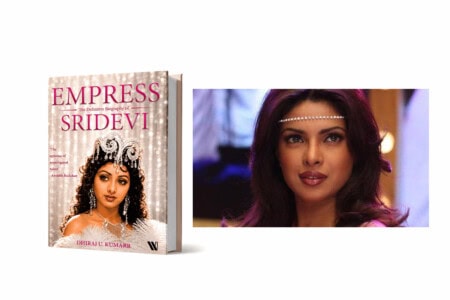

Special Feature: Sridevi-Madhuri Dixit rivalry: who truly ruled Indian cinema’s box office era
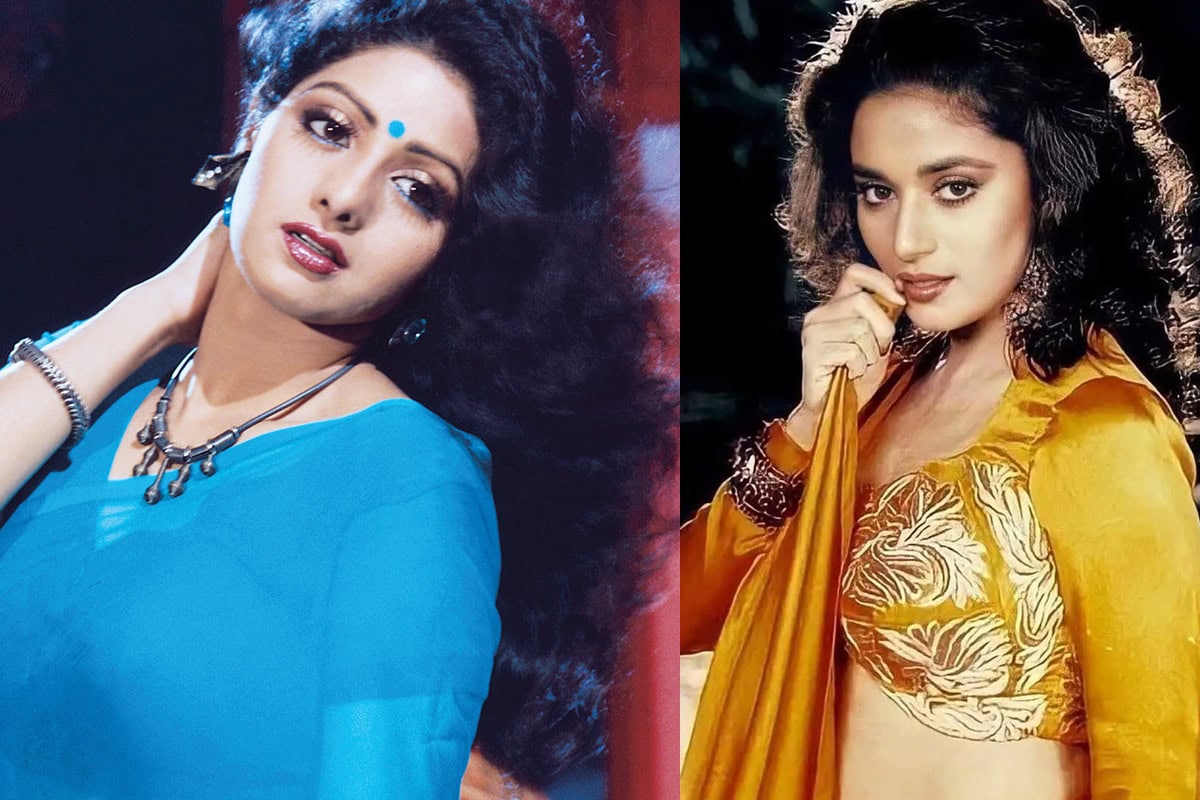
For more than a decade, Hindi cinema was shaped by two women whose careers ran in parallel yet defined different eras: Sridevi and Madhuri Dixit. Their rivalry was never a personal feud; it was a professional comparison built on box‑office power, cultural influence and the industry’s evolving tastes. The question of who was the bigger superstar remains one of Bollywood’s most contested debates because their stardom operated on different scales.
Sridevi entered Hindi cinema as a fully established phenomenon. By the mid‑1980s she was already a pan‑Indian star, commanding Tamil and Telugu blockbusters before becoming the face of mainstream Hindi cinema. This gave her a reach Madhuri Dixit never possessed; Sridevi’s stardom extended across linguistic markets, allowing her to dominate the South and the North simultaneously. Films such as ‘Himmatwala’, ‘Nagina’, ‘Mr India’ and ‘Chandni’ positioned her as the industry’s first modern female superstar — a heroine who could open a film, drive its marketing and deliver box‑office numbers independent of the male lead. Her command over dance, comedy and melodrama made her the most versatile performer of her generation.
Madhuri Dixit’s rise in the late 1980s and early 1990s marked a generational shift. ‘Tezaab’ and ‘Dil’ turned her into the industry’s most bankable star, and by the time ‘Beta’, ‘Hum Aapke Hain Koun..!’ and ‘Raja’ arrived, she was the defining face of Bollywood’s new mainstream. Madhuri’s appeal was rooted in charisma, screen warmth and dance — her songs became cultural events, and her presence shaped the tone of the 1990s. She dominated magazine covers, endorsements and fan culture in a way that reflected the changing media landscape. But unlike Sridevi, Madhuri’s stardom was largely confined to Hindi cinema; she did not have the pan‑Indian footprint or multilingual dominance that Sridevi had built over years of South Indian success.
Comparing their box‑office trajectories shows how differently their superstardom functioned. Sridevi’s peak‑era Hindi hits delivered strong domestic grosses for the 1980s, while her Tamil and Telugu blockbusters pushed her overall reach far higher, giving her a multi‑industry footprint Madhuri never matched. Madhuri’s 1990s run, however, operated in a more lucrative economic landscape, with films such as ‘Beta’, ‘Raja’ and especially ‘Hum Aapke Hain Koun..!’ achieving unprecedented nationwide numbers. Sridevi dominated across multiple industries at once; Madhuri dominated a single industry during its most profitable decade. Both delivered era‑defining commercial success, but their box‑office arcs reflect two very different models of stardom.
Related to this
 .
.
JioHotstar unveils Madhuri Dixit’s ‘Mrs Deshpande’ first look

 .
.
Madhuri Dixit responds to Deepika Padukone’s eight-hour shift demand
 .
.
The rivalry between them was largely constructed by the audience and the trade. They rarely clashed directly at the box office, yet their careers were constantly measured against each other. Sridevi was seen as the more technically accomplished actor, capable of shifting between genres with ease. Madhuri was viewed as the more contemporary star, aligned with the industry’s transition into the glossy, music‑driven 1990s. When they appeared together at select events, the industry treated it as a symbolic meeting of two eras rather than a competitive face‑off.
Who was the bigger superstar depends on the metric. In pure box‑office terms of the 1980s, Sridevi was unmatched, carrying films across multiple industries. In cultural impact during the 1990s, Madhuri was the defining face of the decade, shaping fashion, music and mainstream Hindi cinema’s emotional tone. Sridevi’s stardom was pan‑Indian and rooted in performance; Madhuri’s was nationwide and rooted in persona. Both were dominant, but in different eras and under different industry conditions.
The legacy of their rivalry is that Bollywood has never again seen two actresses command such sustained, overlapping superstardom. Sridevi remains the benchmark for versatility, screen command and pan‑Indian reach; Madhuri remains the benchmark for charisma, mass appeal and 1990s cultural dominance. The industry’s answer to who was bigger is simple: each was the biggest superstar of her own era, and together they defined the modern idea of female stardom in Hindi cinema.