


Film, music & publishing bodies urge stronger copyright protections with AI
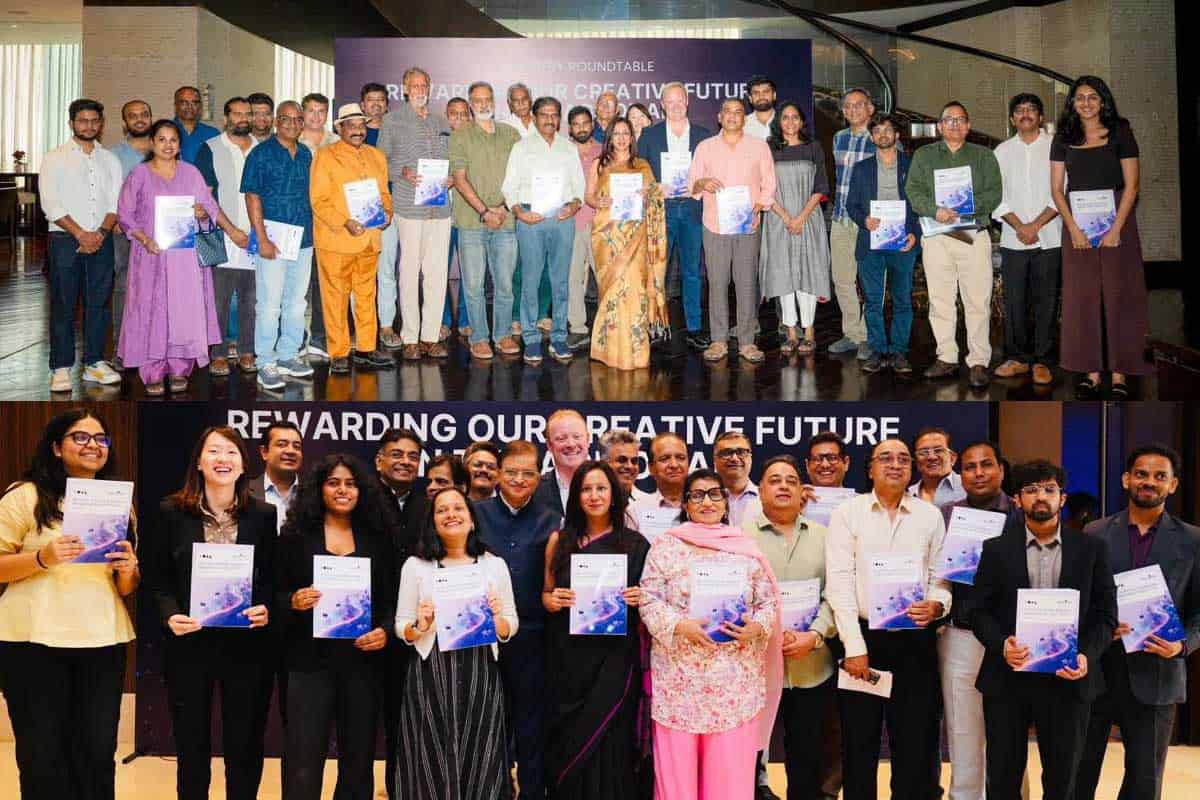
Creative industry bodies representing India’s film, music, publishing and broadcasting sectors convened in Mumbai, Delhi and Hyderabad last week to call for stronger copyright protections as the country shapes its artificial intelligence policy framework.
The meetings brought together organisations from across the creative economy, a sector valued at ₹2.78 trillion and supporting nearly 2.8 million direct jobs, according to EY’s Stories, Scale and Impact report. A separate 2025 MPA–Deloitte study estimated that India’s screen industries generated ₹5.1 lakh crore in economic output in 2024, underscoring the scale of the sector’s contribution.
Participants urged the Government to reject proposals that would grant blanket access to copyrighted works for AI training at government‑set rates. Instead, they pressed for policy anchored in three principles: rightsholder consent, voluntary licensing and stronger enforcement mechanisms to protect creative works in the digital environment.
A whitepaper, AI in the Creative Industry: Deepening the Value Chain, released by Koan Advisory with Creative First, outlined how Indian screen industries are already using AI tools while maintaining creative control.
At the New Delhi roundtable, chaired by Sanjeev Sanyal, Principal Economic Advisor to the Prime Minister, industry representatives raised concerns about weakening copyright frameworks. They argued that voluntary licensing remains essential for sustaining investment and ensuring creators retain control over how their works are used.
Related to this

James Cheatley, Vice President, VOD, Digital Affairs & Intellectual Property, Asia Pacific at the Motion Picture Association, said, “India’s creative industries demonstrated real leadership and foresight in recognising that strong copyright is not a barrier to innovation, but its foundation – especially in the age of AI.”
Abhay Sinha, President of the Film Federation of India, added, “‘Digital India’ must not become ‘free for all India’ – our creative works cannot be treated as raw material for someone else’s business model.”
Speakers across the three cities stressed that AI innovation and copyright protection can coexist, and that predictable policy is essential for India’s ambition to become a global content hub. The roundtables form part of ongoing engagement between industry and policymakers, including discussions at the India AI Impact Summit earlier this year.